Buy maschinen.eu ?
We are moving the project
maschinen.eu .
Are you interested in purchasing the domain
maschinen.eu ?
domain@kv-gmbh.de · 0541-91531010
Buy maschinen.eu ?
How can one learn to become an electronics technician for industrial engineering or automation technology?
To become an electronics technician for industrial engineering or automation technology, one can start by pursuing a relevant educational program, such as an associate degree in electronics engineering technology or industrial automation. These programs typically cover topics such as electrical circuits, industrial control systems, and automation technologies. Additionally, gaining hands-on experience through internships or apprenticeships with companies in the industrial engineering or automation field can provide valuable practical skills. Seeking professional certifications, such as those offered by organizations like the International Society of Automation (ISA) or the Electronics Technicians Association (ETA), can also demonstrate expertise and knowledge in the field. Finally, staying updated with the latest advancements in industrial engineering and automation technology through continuous learning and professional development is essential for a successful career in this field. **
Is the multimeter defective?
It is difficult to determine if the multimeter is defective without more information. If the multimeter is not displaying any readings or is showing inconsistent readings, it could be a sign of a defective unit. It is recommended to check the batteries, connections, and settings of the multimeter to rule out any user errors before concluding that it is defective. If the issue persists after troubleshooting, it may be best to contact the manufacturer for further assistance or consider getting a replacement. **

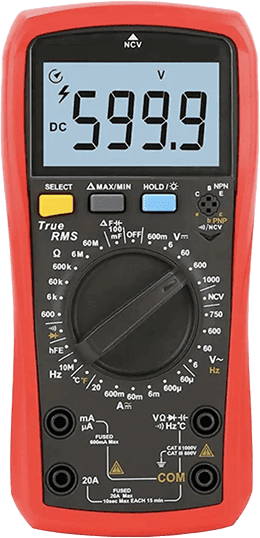
Similar search terms for Multimeter
Top-Angebote
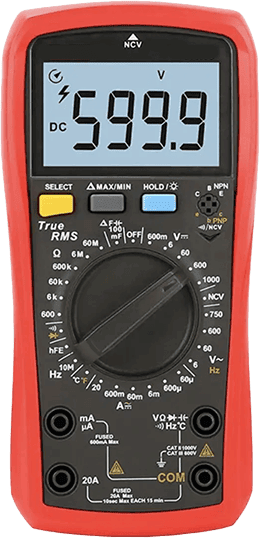
Products related to Multimeter:
-
ENERGY NE00841 MultimeterAmbient temperature from [°C]: -10; max. ambient temperature to [°C]: 50; Length [mm]: 190; Measuring Range from [µA]: 600; Measuring Range to [A]: 10; DC Voltage from [V]: 600; DC Voltage to [V]: 1000; Weight [g]: 834; Measuring Range from [kohm]: 600; Measuring Range to [kohm]: 60; Frequency range from [kHz]: 6; Frequency range to [kHz]: 10; Width [mm]: 90; Operating temperature from [°C]: 0; Operating temperature to [°C]: 40; Measuring Range to (AC) [A]: 10; Gauge: with TFT display; Number of device batteries required: 1; Protection [A]: 10, 0,3; Voltage [V]: 600; AC Voltage from [V]: 6; AC Voltage to [V]: 750; Depth [mm]: 35; Measuring Range from [°C]: 40; Measuring Range to [°C]: 2000; Rechargeable Battery Voltage [V]: 97,99 £*Shipping: 8,45 £Secure redirect to the provider
-
PRECISION-STEEL 211380 MultimeterGauge: with illuminated LCD display; Housing Type: Synthetic Material Housing; DC Voltage to [V]: 500; AC Voltage to [V]: 500; Cable Colour: red/black; Cable Length [mm]: 700; Supplementary Article / Supplementary Info Info 2: with diode test function, with continuity test function; Required appliance battery: 9V Block, Included in the delivery; Product line: DT830D; Container Type: Blister Pack25,49 £*Shipping: 8,45 £Secure redirect to the provider
-
KS TOOLS 117.0215 MultimeterMeasurement Accuracy +/- [degrees]: 23; Required appliance battery: 9V Block; Rechargeable Battery Voltage [V]: 9; Ambient temperature from [°C]: -10; max. ambient temperature to [°C]: 50; Length [mm]: 192; Measuring Range from [µA]: 60; Measuring Range to [A]: 20; DC Voltage from [V]: 600; DC Voltage to [V]: 1000; Weight [g]: 430; Frequency range from [kHz]: 9,999; Frequency range to [kHz]: 9,999; Width [mm]: 92; Operating temperature from [°C]: 0; Operating temperature to [°C]: 40; Battery: not rechargeable; Gauge: with digital display; Number of device batteries required: 1; AC Voltage from [V]: 6; AC Voltage to [V]: 750; Voltage [V]: 10, 6; Depth [mm]: 61; Measuring Range from [°C]: 20; Measuring Range to [°C]: 1832107,99 £*Shipping: 8,45 £Secure redirect to the provider


-
Is the multimeter broken?
To determine if the multimeter is broken, you can perform a few troubleshooting steps. First, check the batteries to ensure they are properly installed and not depleted. Next, inspect the test leads for any damage or wear. You can also test the multimeter on a known voltage source to see if it is reading accurately. If after these steps the multimeter is still not functioning properly, it may be broken and in need of repair or replacement. **
-
Is a multimeter dangerous?
A multimeter can be dangerous if not used properly. It is a tool that measures electrical voltage, current, and resistance, so there is a risk of electric shock if it is used on live circuits without proper precautions. Additionally, mishandling the multimeter or using it in the wrong settings can lead to damage or injury. It is important to follow safety guidelines and receive proper training on how to use a multimeter to avoid any potential dangers. **
-
How does one switch from an electronics technician for industrial engineering to an electronics technician for automation technology?
To switch from being an electronics technician for industrial engineering to automation technology, one can start by gaining knowledge and skills specific to automation technology through courses, workshops, or certifications. It is important to familiarize oneself with automation systems, PLC programming, robotics, and other relevant technologies. Networking with professionals in the automation industry and seeking opportunities for hands-on experience in automation projects can also be beneficial. Updating one's resume and highlighting any relevant experience or skills related to automation technology will help in transitioning to a new role as an electronics technician for automation technology. **
-
How can one switch from an electronics technician for industrial engineering to an electronics technician for automation technology?
To switch from being an electronics technician for industrial engineering to automation technology, one can start by gaining knowledge and skills specific to automation technology through courses or training programs. It is important to familiarize oneself with automation systems, PLC programming, and control systems. Additionally, gaining hands-on experience in automation technology through internships or on-the-job training can be beneficial. Networking with professionals in the automation technology field and seeking mentorship can also help in making a successful transition. **

What is the difference between an electronics technician for industrial engineering and an electronics technician for automation technology?
An electronics technician for industrial engineering typically focuses on maintaining and repairing electronic systems used in various industries, such as manufacturing plants or power plants. They are responsible for ensuring that electronic equipment operates efficiently and safely within an industrial setting. On the other hand, an electronics technician for automation technology specializes in designing, installing, and maintaining automated systems that control machinery and processes. They work with programmable logic controllers (PLCs) and other advanced technologies to optimize production processes and increase efficiency in industrial automation. **
How do you switch from an electronics technician for industrial engineering to an electronics technician for automation technology?
To switch from being an electronics technician for industrial engineering to automation technology, you may need to acquire additional training or certifications specific to automation technology. This could involve taking courses or workshops focused on automation systems, programmable logic controllers (PLCs), robotics, and other relevant technologies. It would also be beneficial to gain practical experience in automation technology through internships or on-the-job training. Networking with professionals in the automation technology field and seeking out job opportunities that align with your new career focus can also help facilitate the transition. **
Top-Angebote
Products related to Multimeter:
-
Friendly Fresh Finds Precision Digital Multimeter Probes Needle Tip Multimeter Test Leads Replacement Set Precision Digital Multimeter Probes Needle Tip Multimeter Test Leads Replacement SetWhen accuracy matters, reliable tools make all the difference. These digital multimeter probes are designed for electricians, technicians, and DIY enthusiasts who need dependable measurements every time. Built with precision needle tips and durable...31,97 $*Shipping: 0,00 $Secure redirect to the provider
-
MILWAUKEE 4933416976 MultimeterVoltage [V]: 600; Protection Type (IP Code): IP64; Gauge: with digital display; Required appliance battery: Included in the delivery, AA (Mignon); Resistor [kohm]: 40000; Frequency range from [Hz]: 2; Frequency range to [kHz]: 50; Protection Rating: III; Product line: 2217-40262,99 £*Shipping: 1,99 £Secure redirect to the provider
-
ENERGY NE00841 MultimeterAmbient temperature from [°C]: -10; max. ambient temperature to [°C]: 50; Length [mm]: 190; Measuring Range from [µA]: 600; Measuring Range to [A]: 10; DC Voltage from [V]: 600; DC Voltage to [V]: 1000; Weight [g]: 834; Measuring Range from [kohm]: 600; Measuring Range to [kohm]: 60; Frequency range from [kHz]: 6; Frequency range to [kHz]: 10; Width [mm]: 90; Operating temperature from [°C]: 0; Operating temperature to [°C]: 40; Measuring Range to (AC) [A]: 10; Gauge: with TFT display; Number of device batteries required: 1; Protection [A]: 10, 0,3; Voltage [V]: 600; AC Voltage from [V]: 6; AC Voltage to [V]: 750; Depth [mm]: 35; Measuring Range from [°C]: 40; Measuring Range to [°C]: 2000; Rechargeable Battery Voltage [V]: 97,99 £*Shipping: 8,45 £Secure redirect to the provider
-
How can one learn to become an electronics technician for industrial engineering or automation technology?
To become an electronics technician for industrial engineering or automation technology, one can start by pursuing a relevant educational program, such as an associate degree in electronics engineering technology or industrial automation. These programs typically cover topics such as electrical circuits, industrial control systems, and automation technologies. Additionally, gaining hands-on experience through internships or apprenticeships with companies in the industrial engineering or automation field can provide valuable practical skills. Seeking professional certifications, such as those offered by organizations like the International Society of Automation (ISA) or the Electronics Technicians Association (ETA), can also demonstrate expertise and knowledge in the field. Finally, staying updated with the latest advancements in industrial engineering and automation technology through continuous learning and professional development is essential for a successful career in this field. **
-
Is the multimeter defective?
It is difficult to determine if the multimeter is defective without more information. If the multimeter is not displaying any readings or is showing inconsistent readings, it could be a sign of a defective unit. It is recommended to check the batteries, connections, and settings of the multimeter to rule out any user errors before concluding that it is defective. If the issue persists after troubleshooting, it may be best to contact the manufacturer for further assistance or consider getting a replacement. **
-
Is the multimeter broken?
To determine if the multimeter is broken, you can perform a few troubleshooting steps. First, check the batteries to ensure they are properly installed and not depleted. Next, inspect the test leads for any damage or wear. You can also test the multimeter on a known voltage source to see if it is reading accurately. If after these steps the multimeter is still not functioning properly, it may be broken and in need of repair or replacement. **
-
Is a multimeter dangerous?
A multimeter can be dangerous if not used properly. It is a tool that measures electrical voltage, current, and resistance, so there is a risk of electric shock if it is used on live circuits without proper precautions. Additionally, mishandling the multimeter or using it in the wrong settings can lead to damage or injury. It is important to follow safety guidelines and receive proper training on how to use a multimeter to avoid any potential dangers. **
Similar search terms for Multimeter
-
PRECISION-STEEL 211380 MultimeterGauge: with illuminated LCD display; Housing Type: Synthetic Material Housing; DC Voltage to [V]: 500; AC Voltage to [V]: 500; Cable Colour: red/black; Cable Length [mm]: 700; Supplementary Article / Supplementary Info Info 2: with diode test function, with continuity test function; Required appliance battery: 9V Block, Included in the delivery; Product line: DT830D; Container Type: Blister Pack25,49 £*Shipping: 8,45 £Secure redirect to the provider
-
KS TOOLS 117.0215 MultimeterMeasurement Accuracy +/- [degrees]: 23; Required appliance battery: 9V Block; Rechargeable Battery Voltage [V]: 9; Ambient temperature from [°C]: -10; max. ambient temperature to [°C]: 50; Length [mm]: 192; Measuring Range from [µA]: 60; Measuring Range to [A]: 20; DC Voltage from [V]: 600; DC Voltage to [V]: 1000; Weight [g]: 430; Frequency range from [kHz]: 9,999; Frequency range to [kHz]: 9,999; Width [mm]: 92; Operating temperature from [°C]: 0; Operating temperature to [°C]: 40; Battery: not rechargeable; Gauge: with digital display; Number of device batteries required: 1; AC Voltage from [V]: 6; AC Voltage to [V]: 750; Voltage [V]: 10, 6; Depth [mm]: 61; Measuring Range from [°C]: 20; Measuring Range to [°C]: 1832107,99 £*Shipping: 8,45 £Secure redirect to the provider
-
How does one switch from an electronics technician for industrial engineering to an electronics technician for automation technology?
To switch from being an electronics technician for industrial engineering to automation technology, one can start by gaining knowledge and skills specific to automation technology through courses, workshops, or certifications. It is important to familiarize oneself with automation systems, PLC programming, robotics, and other relevant technologies. Networking with professionals in the automation industry and seeking opportunities for hands-on experience in automation projects can also be beneficial. Updating one's resume and highlighting any relevant experience or skills related to automation technology will help in transitioning to a new role as an electronics technician for automation technology. **
-
How can one switch from an electronics technician for industrial engineering to an electronics technician for automation technology?
To switch from being an electronics technician for industrial engineering to automation technology, one can start by gaining knowledge and skills specific to automation technology through courses or training programs. It is important to familiarize oneself with automation systems, PLC programming, and control systems. Additionally, gaining hands-on experience in automation technology through internships or on-the-job training can be beneficial. Networking with professionals in the automation technology field and seeking mentorship can also help in making a successful transition. **
-
What is the difference between an electronics technician for industrial engineering and an electronics technician for automation technology?
An electronics technician for industrial engineering typically focuses on maintaining and repairing electronic systems used in various industries, such as manufacturing plants or power plants. They are responsible for ensuring that electronic equipment operates efficiently and safely within an industrial setting. On the other hand, an electronics technician for automation technology specializes in designing, installing, and maintaining automated systems that control machinery and processes. They work with programmable logic controllers (PLCs) and other advanced technologies to optimize production processes and increase efficiency in industrial automation. **
-
How do you switch from an electronics technician for industrial engineering to an electronics technician for automation technology?
To switch from being an electronics technician for industrial engineering to automation technology, you may need to acquire additional training or certifications specific to automation technology. This could involve taking courses or workshops focused on automation systems, programmable logic controllers (PLCs), robotics, and other relevant technologies. It would also be beneficial to gain practical experience in automation technology through internships or on-the-job training. Networking with professionals in the automation technology field and seeking out job opportunities that align with your new career focus can also help facilitate the transition. **
* All prices are inclusive of VAT and, if applicable, plus shipping costs. The offer information is based on the details provided by the respective shop and is updated through automated processes. Real-time updates do not occur, so deviations can occur in individual cases. ** Note: Parts of this content were created by AI.