Buy maschinen.eu ?
We are moving the project
maschinen.eu .
Are you interested in purchasing the domain
maschinen.eu ?
domain@kv-gmbh.de · 0541-91531010
Buy maschinen.eu ?
How can one learn to become an electronics technician for industrial engineering or automation technology?
To become an electronics technician for industrial engineering or automation technology, one can start by pursuing a relevant educational program, such as an associate degree in electronics engineering technology or industrial automation. These programs typically cover topics such as electrical circuits, industrial control systems, and automation technologies. Additionally, gaining hands-on experience through internships or apprenticeships with companies in the industrial engineering or automation field can provide valuable practical skills. Seeking professional certifications, such as those offered by organizations like the International Society of Automation (ISA) or the Electronics Technicians Association (ETA), can also demonstrate expertise and knowledge in the field. Finally, staying updated with the latest advancements in industrial engineering and automation technology through continuous learning and professional development is essential for a successful career in this field. **
How does one switch from an electronics technician for industrial engineering to an electronics technician for automation technology?
To switch from being an electronics technician for industrial engineering to automation technology, one can start by gaining knowledge and skills specific to automation technology through courses, workshops, or certifications. It is important to familiarize oneself with automation systems, PLC programming, robotics, and other relevant technologies. Networking with professionals in the automation industry and seeking opportunities for hands-on experience in automation projects can also be beneficial. Updating one's resume and highlighting any relevant experience or skills related to automation technology will help in transitioning to a new role as an electronics technician for automation technology. **

Similar search terms for Hikmicro-MINI2-V2-Thermal
Top-Angebote
Products related to Hikmicro-MINI2-V2-Thermal:
-
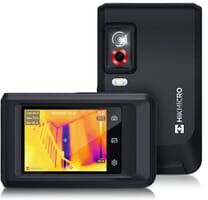
Hikmicro Pocket 2 Thermal Imaging CameraHikmicro Pocket 2 Thermal Imaging Camera (POCKET2) The Hikmicro Pocket 2 Thermal Camera is a small but capable thermal imager for professionals in building inspection, HVAC, electrical diagnostics and industrial maintenance. Compact enough to fit in a pocket and packed with features, it combines a 256 x 192 VOx thermal sensor (49,152 pixels) with an 8MP optical lens for clear thermal and visual imaging. With a wide temperature range from -20°C to +400°C and accuracy of ±2°C/±2%, the Pocket 2 delivers reliable results in demanding environments. A smooth 25Hz frame rate, 3.5 LCD touchscreen and multiple imaging modes (Thermal, Optical, Fusion, PIP) make it an intuitive tool for fast fault detection and reporting. Key Features & Benefits High-Resolution Thermal Sensor:502,80 £*Shipping: 0,00 £Secure redirect to the provider
-
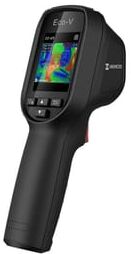
Hikmicro ECO-V Thermal Imaging CameraHikmicro ECO-V Thermal Imaging Camera The Hikmicro ECO-V Thermal Imaging Camera is a compact, rugged, professional tool for building inspections, HVAC troubleshooting, electrical diagnostics and maintenance work. With its dual camera system (thermal + visual) and Fusion mode, visual detail can be blended with thermal imagery for sharper, more actionable results. Featuring a 96 x 96 IR sensor (9,216 pixels) enhanced to 240 x 240 (57,600 pixels) with SuperIR, the ECO-V delivers high-clarity thermal images at a smooth 25Hz refresh rate. A wide 50° field of view suits scanning large areas quickly, and a temperature measurement range of -20°C to 550°C with ±2°C/±2% accuracy suits both residential and industrial applications. Built tough with IP54 dust/water protection and 2m drop resistance, the ECO-V is designed for real-world fieldwork.250,80 £*Shipping: 0,00 £Secure redirect to the provider
-
Hikmicro B20S Handheld Thermal Imaging CameraHikmicro B20S Handheld Thermal Imaging Camera The Hikmicro B20S Handheld Thermal Camera is a compact, high-performance thermal imager for HVAC technicians, building inspectors, electricians and automotive engineers. With a 256 x 192 infrared detector (49,152 pixels),610,80 £*Shipping: 0,00 £Secure redirect to the provider
-
Hikmicro MiniX Wireless Dual Thermal CameraHikmicro MiniX Wireless Dual Thermal Camera The Hikmicro MiniX Wireless Dual Thermal Camera is a next-generation smartphone thermal imager for professionals who need flexibility, accuracy and portability. With a 256 x 192 VOx sensor (49,152 pixels), SuperIR image enhancement and a 0.3MP optical camera, it delivers clear images and thermal data straight to an iOS or Android device. Unlike plug-in models, the MiniX connects wirelessly via QR scan, giving total freedom of movement. Its versatile mounting options — phone clip, tripod or magnetic wall mount — suit field engineers, HVAC technicians, electricians, automotive specialists and building inspectors. With up to 4 hours of continuous operation, a 25Hz refresh rate and a -20°C to 550°C range, the MiniX performs across demanding environments, from diagnosing overheating circuits to d310,80 £*Shipping: 0,00 £Secure redirect to the provider


-
How can one switch from an electronics technician for industrial engineering to an electronics technician for automation technology?
To switch from being an electronics technician for industrial engineering to automation technology, one can start by gaining knowledge and skills specific to automation technology through courses or training programs. It is important to familiarize oneself with automation systems, PLC programming, and control systems. Additionally, gaining hands-on experience in automation technology through internships or on-the-job training can be beneficial. Networking with professionals in the automation technology field and seeking mentorship can also help in making a successful transition. **
-
What is the difference between an electronics technician for industrial engineering and an electronics technician for automation technology?
An electronics technician for industrial engineering typically focuses on maintaining and repairing electronic systems used in various industries, such as manufacturing plants or power plants. They are responsible for ensuring that electronic equipment operates efficiently and safely within an industrial setting. On the other hand, an electronics technician for automation technology specializes in designing, installing, and maintaining automated systems that control machinery and processes. They work with programmable logic controllers (PLCs) and other advanced technologies to optimize production processes and increase efficiency in industrial automation. **
-
How do you switch from an electronics technician for industrial engineering to an electronics technician for automation technology?
To switch from being an electronics technician for industrial engineering to automation technology, you may need to acquire additional training or certifications specific to automation technology. This could involve taking courses or workshops focused on automation systems, programmable logic controllers (PLCs), robotics, and other relevant technologies. It would also be beneficial to gain practical experience in automation technology through internships or on-the-job training. Networking with professionals in the automation technology field and seeking out job opportunities that align with your new career focus can also help facilitate the transition. **
-
What is the professional title for someone who works as an electronics technician for industrial engineering or automation technology?
The professional title for someone who works as an electronics technician for industrial engineering or automation technology is typically referred to as an "Automation Technician" or "Industrial Electronics Technician." These professionals are responsible for installing, maintaining, and repairing electronic systems and equipment used in industrial settings to automate processes and improve efficiency. They play a crucial role in ensuring that machinery and systems function properly to meet production goals and quality standards. **

Could you please provide thermal tasks related to electrical engineering?
Sure! Some thermal tasks related to electrical engineering include designing cooling systems for electronic components to prevent overheating, analyzing the thermal performance of power distribution systems to ensure efficiency, and conducting thermal simulations to optimize the thermal management of electrical devices. Additionally, troubleshooting thermal issues in electrical systems and implementing thermal insulation techniques to improve energy efficiency are also common tasks in this field. **
Where was the v2 tested?
The v2 was tested in the United States. **
Top-Angebote
Products related to Hikmicro-MINI2-V2-Thermal:
-
Hikmicro MINI2 V2 Thermal Imaging Camera for SmartphonesHikmicro MINI2 V2 Thermal Imaging Camera for Smartphones (Mini2-Series-V2) The Hikmicro MINI2 V2 Thermal Imaging Camera turns a smartphone into a professional thermal imager. With its high-resolution 256 x 192 VOx sensor (49,152 pixels) and SuperIR image enhancement, it produces clear thermal images for diagnostics, inspections and everyday problem-solving. Suited to HVAC engineers, electricians, plumbers, homeowners and hobbyists, the MINI2 V2 is compact, lightweight and battery-free, powered directly from the connected phone. It measures -20°C to 400°C for reliable results across a wide range of applications, with no screen of its own — all viewing and control happens through the smartphone via the HIKMICRO Viewer app. Key Features & Benefits High Thermal Resolution:186,00 £*Shipping: 0,00 £Secure redirect to the provider
-
Hikmicro PocketE Thermal Imaging CameraHikmicro PocketE Thermal Imaging Camera (POCKETE) The Hikmicro PocketE Thermal Imaging Camera is a pocket-sized, professional thermal camera for building inspections, HVAC, electrical and mechanical maintenance. With a 96 x 96 (9,216 pixel) infrared resolution and SuperIR enhancement upscaling images to 240 x 240 (57,600 pixels), the PocketE gives the clarity needed to identify faults quickly and accurately. Featuring a dual camera system with a built-in IR sensor and a 0.3MP visible camera, the PocketE has five image modes (Thermal, Visual, PIP, Fusion and Blending) for maximum versatility. Its 3.5 LCD touchscreen, Wi-Fi connectivity and onboard storage make it a compact yet capable tool for professionals. Key Features & Benefits SuperIR Enhancement: Upscales 96 x 96 IR286,80 £*Shipping: 0,00 £Secure redirect to the provider
-
Hikmicro Pocket 2 Thermal Imaging CameraHikmicro Pocket 2 Thermal Imaging Camera (POCKET2) The Hikmicro Pocket 2 Thermal Camera is a small but capable thermal imager for professionals in building inspection, HVAC, electrical diagnostics and industrial maintenance. Compact enough to fit in a pocket and packed with features, it combines a 256 x 192 VOx thermal sensor (49,152 pixels) with an 8MP optical lens for clear thermal and visual imaging. With a wide temperature range from -20°C to +400°C and accuracy of ±2°C/±2%, the Pocket 2 delivers reliable results in demanding environments. A smooth 25Hz frame rate, 3.5 LCD touchscreen and multiple imaging modes (Thermal, Optical, Fusion, PIP) make it an intuitive tool for fast fault detection and reporting. Key Features & Benefits High-Resolution Thermal Sensor:502,80 £*Shipping: 0,00 £Secure redirect to the provider
-
Hikmicro ECO-V Thermal Imaging CameraHikmicro ECO-V Thermal Imaging Camera The Hikmicro ECO-V Thermal Imaging Camera is a compact, rugged, professional tool for building inspections, HVAC troubleshooting, electrical diagnostics and maintenance work. With its dual camera system (thermal + visual) and Fusion mode, visual detail can be blended with thermal imagery for sharper, more actionable results. Featuring a 96 x 96 IR sensor (9,216 pixels) enhanced to 240 x 240 (57,600 pixels) with SuperIR, the ECO-V delivers high-clarity thermal images at a smooth 25Hz refresh rate. A wide 50° field of view suits scanning large areas quickly, and a temperature measurement range of -20°C to 550°C with ±2°C/±2% accuracy suits both residential and industrial applications. Built tough with IP54 dust/water protection and 2m drop resistance, the ECO-V is designed for real-world fieldwork.250,80 £*Shipping: 0,00 £Secure redirect to the provider
-
How can one learn to become an electronics technician for industrial engineering or automation technology?
To become an electronics technician for industrial engineering or automation technology, one can start by pursuing a relevant educational program, such as an associate degree in electronics engineering technology or industrial automation. These programs typically cover topics such as electrical circuits, industrial control systems, and automation technologies. Additionally, gaining hands-on experience through internships or apprenticeships with companies in the industrial engineering or automation field can provide valuable practical skills. Seeking professional certifications, such as those offered by organizations like the International Society of Automation (ISA) or the Electronics Technicians Association (ETA), can also demonstrate expertise and knowledge in the field. Finally, staying updated with the latest advancements in industrial engineering and automation technology through continuous learning and professional development is essential for a successful career in this field. **
-
How does one switch from an electronics technician for industrial engineering to an electronics technician for automation technology?
To switch from being an electronics technician for industrial engineering to automation technology, one can start by gaining knowledge and skills specific to automation technology through courses, workshops, or certifications. It is important to familiarize oneself with automation systems, PLC programming, robotics, and other relevant technologies. Networking with professionals in the automation industry and seeking opportunities for hands-on experience in automation projects can also be beneficial. Updating one's resume and highlighting any relevant experience or skills related to automation technology will help in transitioning to a new role as an electronics technician for automation technology. **
-
How can one switch from an electronics technician for industrial engineering to an electronics technician for automation technology?
To switch from being an electronics technician for industrial engineering to automation technology, one can start by gaining knowledge and skills specific to automation technology through courses or training programs. It is important to familiarize oneself with automation systems, PLC programming, and control systems. Additionally, gaining hands-on experience in automation technology through internships or on-the-job training can be beneficial. Networking with professionals in the automation technology field and seeking mentorship can also help in making a successful transition. **
-
What is the difference between an electronics technician for industrial engineering and an electronics technician for automation technology?
An electronics technician for industrial engineering typically focuses on maintaining and repairing electronic systems used in various industries, such as manufacturing plants or power plants. They are responsible for ensuring that electronic equipment operates efficiently and safely within an industrial setting. On the other hand, an electronics technician for automation technology specializes in designing, installing, and maintaining automated systems that control machinery and processes. They work with programmable logic controllers (PLCs) and other advanced technologies to optimize production processes and increase efficiency in industrial automation. **
Similar search terms for Hikmicro-MINI2-V2-Thermal
-
Hikmicro B20S Handheld Thermal Imaging CameraHikmicro B20S Handheld Thermal Imaging Camera The Hikmicro B20S Handheld Thermal Camera is a compact, high-performance thermal imager for HVAC technicians, building inspectors, electricians and automotive engineers. With a 256 x 192 infrared detector (49,152 pixels),610,80 £*Shipping: 0,00 £Secure redirect to the provider
-
Hikmicro MiniX Wireless Dual Thermal CameraHikmicro MiniX Wireless Dual Thermal Camera The Hikmicro MiniX Wireless Dual Thermal Camera is a next-generation smartphone thermal imager for professionals who need flexibility, accuracy and portability. With a 256 x 192 VOx sensor (49,152 pixels), SuperIR image enhancement and a 0.3MP optical camera, it delivers clear images and thermal data straight to an iOS or Android device. Unlike plug-in models, the MiniX connects wirelessly via QR scan, giving total freedom of movement. Its versatile mounting options — phone clip, tripod or magnetic wall mount — suit field engineers, HVAC technicians, electricians, automotive specialists and building inspectors. With up to 4 hours of continuous operation, a 25Hz refresh rate and a -20°C to 550°C range, the MiniX performs across demanding environments, from diagnosing overheating circuits to d310,80 £*Shipping: 0,00 £Secure redirect to the provider
-
Hikmicro M11W Thermal Handheld Camera - Focus FreeHikmicro M11W Thermal Handheld Camera – Focus Free The Hikmicro M11W Thermal Handheld Camera is for professionals who need to inspect large objects, buildings and industrial systems quickly and accurately. With a 37.5° x 27.9° wide-angle lens, a 192 x 144 IR detector and SuperIR image enhancement (up to 384 x 288 pixels), the M11W captures clear thermal images of large areas in one shot. Equipped with a 3.5 LCD touchscreen, an 8MP visible-light camera and multiple imaging modes (Thermal, Visual, Fusion, PIP, Blending), it ensures precise fault detection and easy operation. With voice/text annotations, laser pointer targeting and Wi-Fi connectivity, the M11W makes inspections and reporting more efficient. Key Features & Benefits Wide-Angle Thermal Imaging: 37.5° x 27.690,00 £*Shipping: 0,00 £Secure redirect to the provider
-
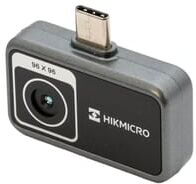
Hikmicro MiniE Infrared Thermal Imager for Type-C Phones – 25HzHikmicro MiniE Infrared Thermal Imager for Type-C Phones – 25Hz The Hikmicro MiniE Infrared Phone Thermal Imager (25Hz) turns a smartphone into a thermal imaging tool. Whether checking heat loss in a home, diagnosing overheating circuits or monitoring pets and reptile habitats, the MiniE delivers clear thermal images with SuperIR technology for more detail and less noise. With a sensitive VOx sensor (NETD < 50 mK) and 96 x 96 pixels, it measures across a wide temperature range of -20°C to 400°C, with ±2°C accuracy specifically within the -20°C to 100°C range. Designed for convenience, it's battery-free, ultra-lightweight (20g) and works with both Android (USB-C) and iOS (Lightning via included adapter). As the device has no screen of its own, all viewing and control happens through the connected smartphone via the free HIKMICRO Viewer app.94,80 £*Shipping: 0,00 £Secure redirect to the provider
-
How do you switch from an electronics technician for industrial engineering to an electronics technician for automation technology?
To switch from being an electronics technician for industrial engineering to automation technology, you may need to acquire additional training or certifications specific to automation technology. This could involve taking courses or workshops focused on automation systems, programmable logic controllers (PLCs), robotics, and other relevant technologies. It would also be beneficial to gain practical experience in automation technology through internships or on-the-job training. Networking with professionals in the automation technology field and seeking out job opportunities that align with your new career focus can also help facilitate the transition. **
-
What is the professional title for someone who works as an electronics technician for industrial engineering or automation technology?
The professional title for someone who works as an electronics technician for industrial engineering or automation technology is typically referred to as an "Automation Technician" or "Industrial Electronics Technician." These professionals are responsible for installing, maintaining, and repairing electronic systems and equipment used in industrial settings to automate processes and improve efficiency. They play a crucial role in ensuring that machinery and systems function properly to meet production goals and quality standards. **
-
Could you please provide thermal tasks related to electrical engineering?
Sure! Some thermal tasks related to electrical engineering include designing cooling systems for electronic components to prevent overheating, analyzing the thermal performance of power distribution systems to ensure efficiency, and conducting thermal simulations to optimize the thermal management of electrical devices. Additionally, troubleshooting thermal issues in electrical systems and implementing thermal insulation techniques to improve energy efficiency are also common tasks in this field. **
-
Where was the v2 tested?
The v2 was tested in the United States. **
* All prices are inclusive of VAT and, if applicable, plus shipping costs. The offer information is based on the details provided by the respective shop and is updated through automated processes. Real-time updates do not occur, so deviations can occur in individual cases. ** Note: Parts of this content were created by AI.